
How your body responds to alcohol and carbohydrate in drinks can vary depending on many things. This includes your age, weight, gender, activity level and what other foods and drinks you have had.
Always monitor your blood glucose levels and discuss with your diabetes team if you are unsure.
When you are out drinking alcohol, take some ID with you to show you have diabetes, and make sure the people you are with know you have diabetes and how drinking alcohol may affect you.
There is no reason for people with Type 1 diabetes to stop drinking alcohol. However, there are some considerations which you need to take into account.
Know the limit?
The recommended amounts of alcohol for people with diabetes and the general population are exactly the same. It applies equally to men and women:
- To keep health risks from drinking alcohol to a low level, it is safest not to drink more than 14 units per week*.
- It is best to spread this evenly over three days or more.
- If you wish to cut down the amount you’re drinking, a good way to help achieve this is to have several alcohol-free days each week or alternate alcoholic with non-alcoholic drinks.
*One alcohol unit is measured as 10ml or 8g of pure alcohol. A typical pint of beer/lager contains around one to two units. A glass of wine can be between one and a half to three units, depending on the strength and the size of the glass.
For more information see the drinkaware website for more information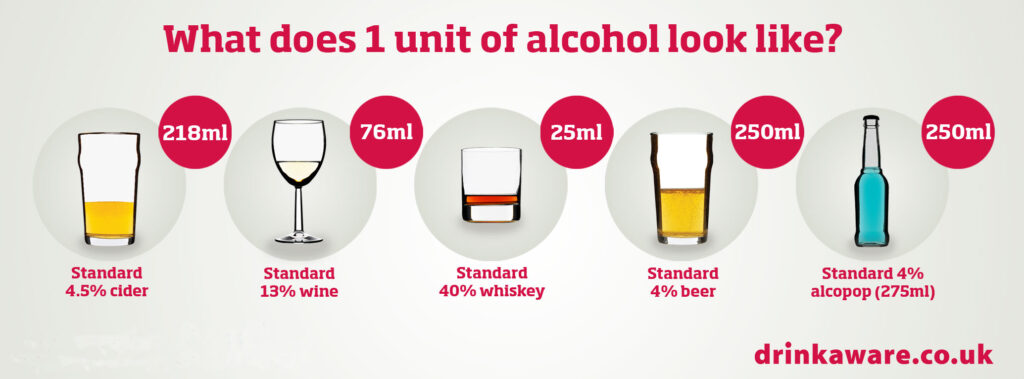
How does alcohol affect blood glucose levels?
All alcohol can cause delayed hypos (blood glucose levels less then 4mmol/l)…. let’s take a look at how this happens.
The liver is a very strict house keeper – it does one job at a time. Whilst it is processing alcohol, it is unable to release glucose from its stores, therefore it increases the risk of hypos and makes it harder to recover from low blood glucose levels later on.
Glucagon, a hormone found in the pancreas promotes the breakdown of glycogen (energy stores) to glucose in the liver. Breakdown of glycogen is reduced if the liver is also processing alcohol.
Carbohydrate containing drinks will cause an initial rise in blood glucose levels and in large amounts increase the risk of delayed hypos.
Very low or carbohydrate free drinks do not cause this initial rise and in large amounts increase the risk of delayed hypos.
To prevent a hypo later on you can either:
- Reduce your next dose of basal insulin by 10-20% if you take this twice per day.
- Eat extra carbohydrates if you take you basal insulin once per day. An extra 20-30g of carbohydrate is a good place to start. Remember no insulin is needed with this snack.
Top tips
- Always be mindful of what else you are doing while drinking alcohol that could lower your glucose levels e.g. dancing, walking home etc.
- Never use a correction dose after alcohol because you are at risk of delayed hypos.
- Monitor you blood glucose levels regularly while drinking alcohol and for the next 24 hours.
- Glucagon is less effective after alcohol making hypos more dangerous.
- Always carry hypo treatment with you e.g. 5 jelly babies, 3 glucose tablets.
- Always go out with someone who knows you have diabetes and carry Diabetes ID just in case your hypo is mistaken with too much alcohol.
- If you drink alcohol regularly, you might want to consider the timing of your basal insulin so you do not have to remember to take the insulin while you are drinking.
If you have any suggestions or comments regarding this leaflet please let your dietitian know.